News      
  Article      
  Supplier      
  Case Study      
  Product      
 
  Article
Smart Manufacturing-Whoever Adopts AI Agents First Will Lead the Security Industry
  Whoever Adopts AI Agents First Will Lead the Security Industry
   
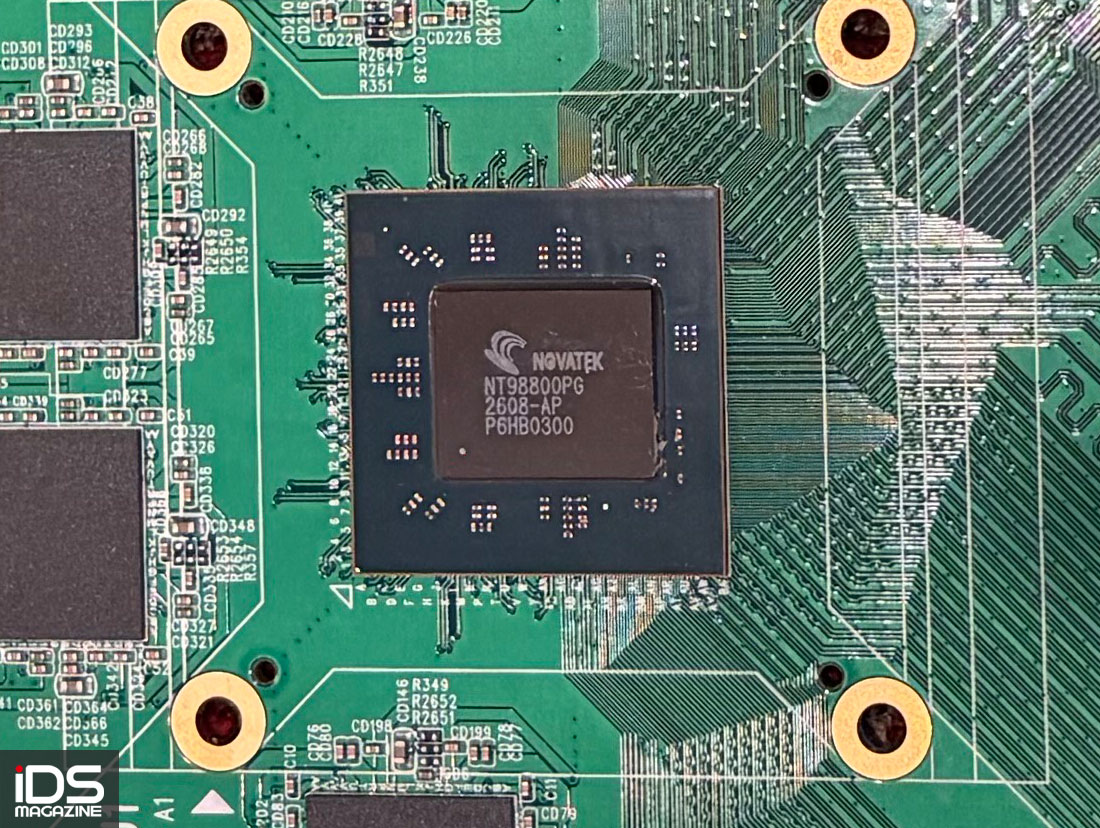
  The recent wave of excitement around OpenClaw, the so-called “AI Lobster,” has quickly pushed AI agents out of the tech community and into much broader public awareness. This open-source AI agent platform is designed not merely to answer questions, but to connect through a conversational interface with desktop software, cloud services, and a wide range of tools to execute multi-step tasks. The change it is about to bring is making the real-world potential of agentic AI far more concrete to the market. This trend deserves the security industry’s close attention because AI is no longer being used only for Q&A, summarization, and content generation. It is now beginning to help organize data, connect systems, call tools, execute workflows, and move tasks forward. For the security industry, what is truly needed today is the ability to rapidly integrate information, understand the context of an incident, support precise analysis, identify targets, and locate them efficiently.


Smart Manufacturing-Taiwan’s First “Smart Cloud Recognition System” Redefines Local Public Security Capabilities
  Taiwan’s First “Smart Cloud Recognition System” Redefines Local Public Security Capabilities
   
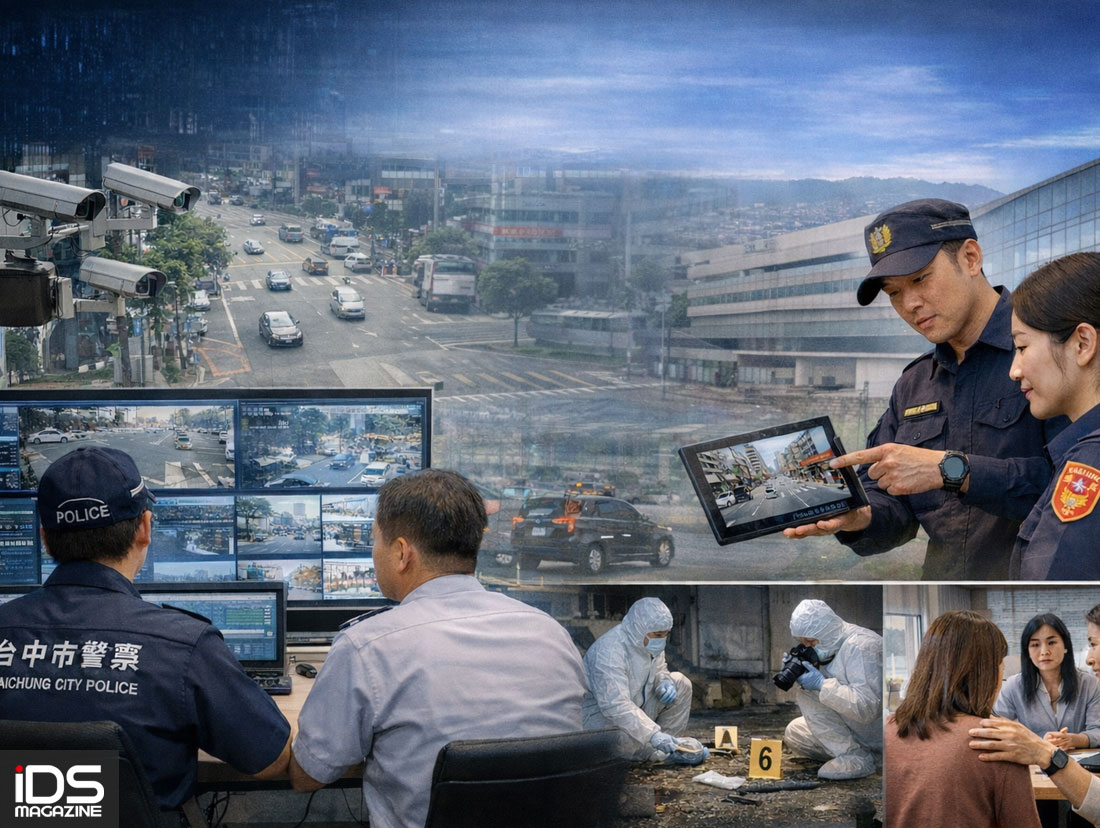
  As criminal methods continue to evolve at an accelerating pace, the greatest challenge facing modern law enforcement is no longer evidence collection alone, but the ability to rapidly extract actionable intelligence from vast volumes of fragmented video footage and digital information. In response, the Taichung City Police Department has officially unveiled its “Smart Cloud Recognition System”, an AI-powered policing platform designed to support digital investigations, major criminal forensics, and the protection of women and children. The system represents a strategic shift toward making video and data assets immediately operational tools for frontline law enforcement.


Smart Manufacturing-Hanoi Launches Smart Traffic Control Center as ITS and AI Traffic Applications Move into Full-Scale Deployment
  Hanoi Launches Smart Traffic Control Center as ITS and AI Traffic Applications Move into Full-Scale Deployment
   
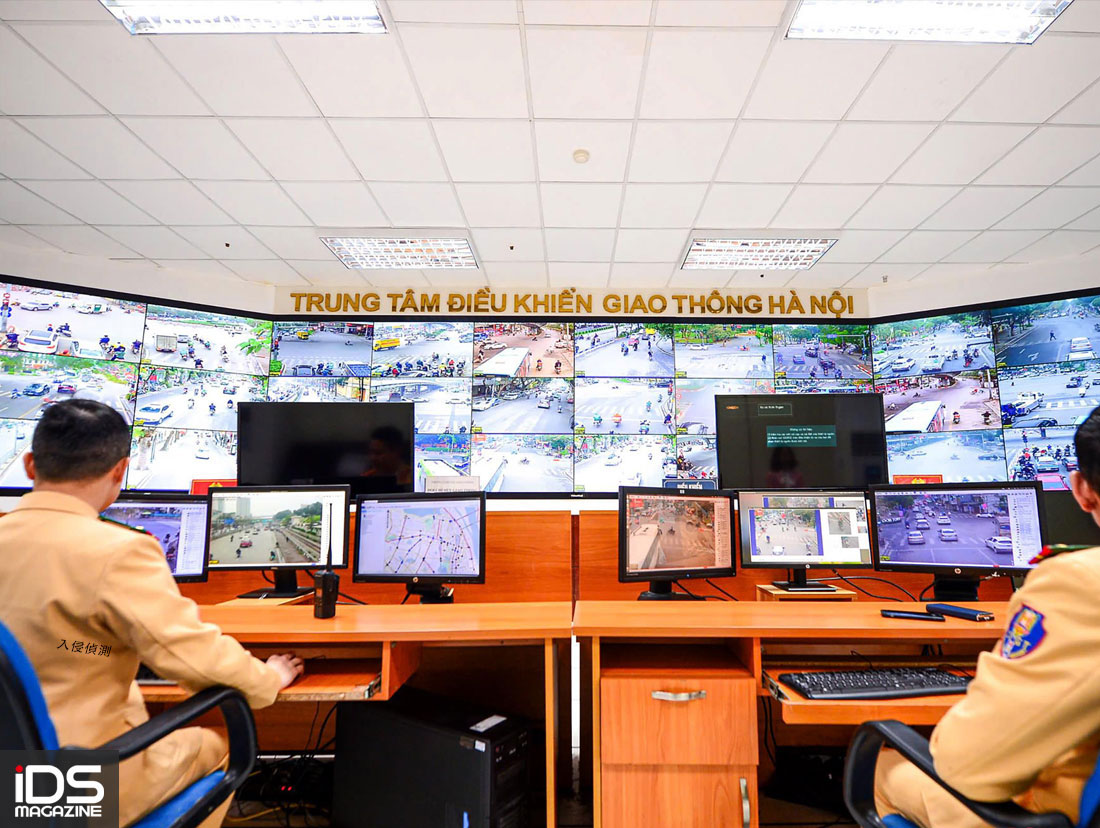
  In mid-December 2025, the capital of Vietnam, Hanoi, officially launched its Smart Traffic Control Center—an initiative the city government describes as the “brain” of urban traffic management. The system connects 1,837 AI-enabled cameras deployed across 195 key intersections and arterial corridors, integrates 188 intelligent traffic signal control cabinets, and links them to a centralized analytics platform capable of monitoring traffic flow, violations, accidents, and public-order incidents in real time. The launch marks the culmination of Hanoi’s Intelligent Transport System (ITS) program, which has been under phased development since 2022 through pilot deployments, system integration, infrastructure investment, and regulatory alignment, ultimately forming a city-scale traffic management capability.


Smart Manufacturing-How Video Surveillance AI Is “Trained”
  How Video Surveillance AI Is “Trained”
   
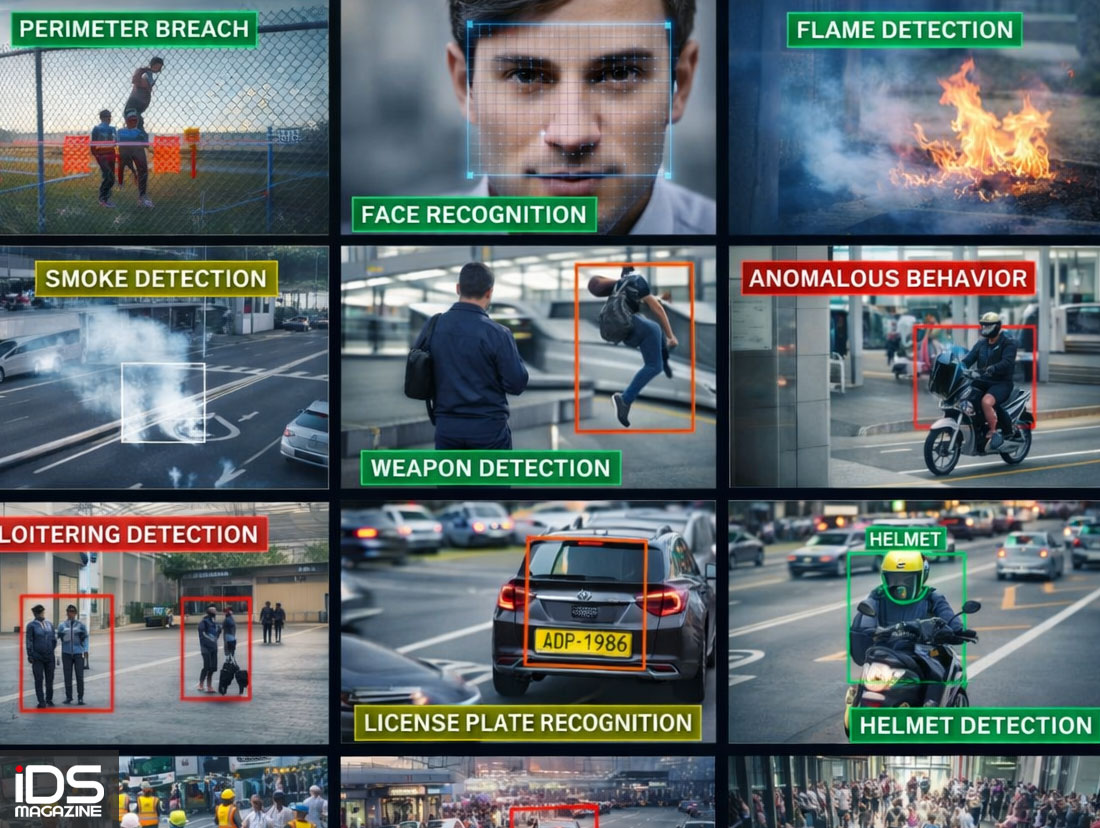
  Video surveillance AI is often described as something that can “automatically recognize what’s happening once the system is installed,” as if deploying the hardware and turning on the algorithm is all it takes for video to turn into actionable intelligence. In real-world projects and long-term operations, however, this understanding is far too simplistic. In practice, video surveillance AI behaves much more like a visual system that must be cultivated over time and continuously recalibrated. It is not something you configure once and expect to work forever; changes in environment, usage patterns, and site conditions constantly put the system to the test.


Smart Manufacturing-A First Look at Thailand’s Security Market
  A First Look at Thailand’s Security Market
   
  In recent years, Thailand has gradually emerged as one of the most significant markets within Southeast Asia’s security industry. This shift is driven by the sustained advancement of national digital policies, the steady rollout of government projects, and the parallel growth of demand from both industry and urban sectors. Combined with a mature local system integrator ecosystem, Thailand has formed a market environment with clear structure and a well-defined operational rhythm.


Smart Manufacturing-Explosion-Proof Surveillance Deployment in High-Risk Liquid Ammonia Facilities
  Explosion-Proof Surveillance Deployment in High-Risk Liquid Ammonia Facilities
   
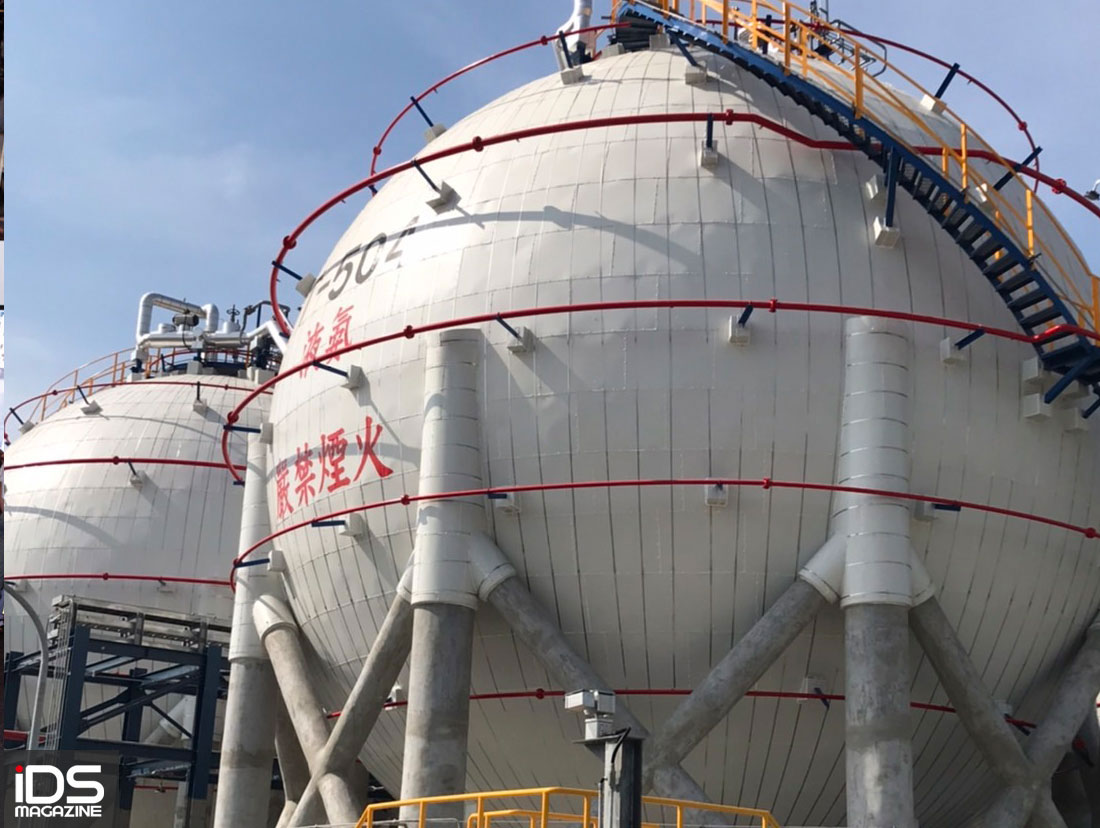
  In the chemical and high-pressure gas storage and transportation industries, “safety” is not an abstract concept but a system that must be concretely implemented and operate around the clock. Liquid ammonia, in particular, is highly volatile and irritating, with inherent explosion risks. Any leakage during storage or transfer can cause serious injury to personnel and create incalculable impacts on the surrounding environment and operational continuity. Under these high-risk conditions, the launch of the liquid ammonia storage and transfer CCTV deployment at CGTDC Corporation represents a textbook example of moving from passive risk prevention toward real-time, visualized safety management.


Smart Manufacturing-Why Surveillance Images Gradually Lose Focus Without Anyone Noticing
  Why Surveillance Images Gradually Lose Focus Without Anyone Noticing
   
  During the planning stage of most security projects, discussions tend to revolve around camera resolution, night-vision performance, and AI capabilities. Yet after years of real-world operation, system operators often encounter a problem that is hard to define as a clear malfunction, but is unmistakably wrong: the image slowly becomes blurry, as if the focus has drifted over time. This phenomenon is not the result of an obvious camera failure, but rather a gradual process that accumulates quietly. It is also one of the main reasons many sites only realize—upon later review—that image quality has fallen far below what it was at the time of system acceptance.


Smart Manufacturing-Six Key Trends in Access Control Applications for 2026
  Six Key Trends in Access Control Applications for 2026
   
  In most people’s minds, access control systems have long been seen as tools that simply manage who is allowed in and who is kept out. Looking back from the perspective of 2026, however, this understanding is clearly outdated. The global security market is undergoing a structural shift, and access control systems are evolving from standalone devices into core platforms that span security management, operational efficiency, and digital governance. They are no longer just a supporting subsystem attached to video surveillance, but are beginning to play an active role in managing the relationships between people, spaces, and data—becoming a key node in smart building and corporate governance frameworks.


Smart Manufacturing-If ONVIF Isn’t Clear at First Glance, Take a Second Look
  If ONVIF Isn’t Clear at First Glance, Take a Second Look
   
  In today’s IP security landscape, integration is no longer a value-added feature—it is a basic requirement for whether a system can operate sustainably over time. From video surveillance and access control to event alarms, AI video analytics, and cloud platforms, almost no security project can now be completed using a single brand or a closed architecture. It is precisely under this industry reality that ONVIF has evolved from a technical specification organization into the de facto standard-setter for common communication protocols across the IP security industry.


Smart Manufacturing-Understanding the NDAA - From the U.S. National Defense Authorization Act to the Rules Reshaping the Global Security Supply Chain
  Understanding the NDAA - From the U.S. National Defense Authorization Act to the Rules Reshaping the Global Security Supply Chain
   
  In recent years, across security industry exchanges—whether at ISC West in the United States, major security exhibitions in Europe, or meetings among system integrators and manufacturers in Taiwan—the term “NDAA” has become impossible to avoid. It is no longer just a footnote on a product datasheet, nor merely a market label. Instead, it has evolved into a core rule that is profoundly reshaping global security supply chains, product design logic, and corporate market strategies. For many security professionals, the real challenge is no longer whether they have heard of the NDAA, but whether they truly understand its nature—and why a U.S. defense law has become a shared threshold for the global market.


About iDS Magazine  
   
The Smart Manufacturing industry has long suffered from information asymmetry, preventing good products and technologies from reaching the right businesses and manufacturers accurately and efficiently. Through this platform, we aim to build a fair, fast “information wall” that delivers the right insights and equipment to the right readers—quickly and professionally. With years of experience in vertical markets, we have an in-depth understanding of real-world needs and stay on top of industry and application-market developments, fostering diverse, dynamic interaction between solution providers and end-users across the Smart Manufacturing ecosystem.  


  Aouut us | Content Policy | Privacy Policy | Copyright Usage | Contact Us
   
   
  Follow Us


  *This website will not charge readers any fees of any kind—such as brokerage or handling fees. If anyone fraudulently attempts to collect payment from you in our name, please inform us immediately.
 
Affiliated Media    
       
Copyright @ 2013 iDS Magazine