| |
|
| NOVATEK Advances Agentic AI Chips for Proactive Video Surveillance |
|
|
|
| Emily |
Published: :2026/5/10 |
|
|
|
|
|
| |
|
| |
|
|
| Amid the rapid evolution of AI video surveillance, chip vendors are becoming a key force behind the upgrade of intelligent security. In recent years, NOVATEK has continued to deepen its presence in the security imaging chip market, with applications spanning IP cameras, NVRs, IoT, smart buildings, and machine vision. Among these segments, security remains its primary market. According to the company, security-related business accounts for approximately 65% of the revenue of its security division. This position allows NOVATEK to maintain long-term access to first-hand market demand from system manufacturers, brand vendors, and end-user applications across the video surveillance industry chain. |
| |
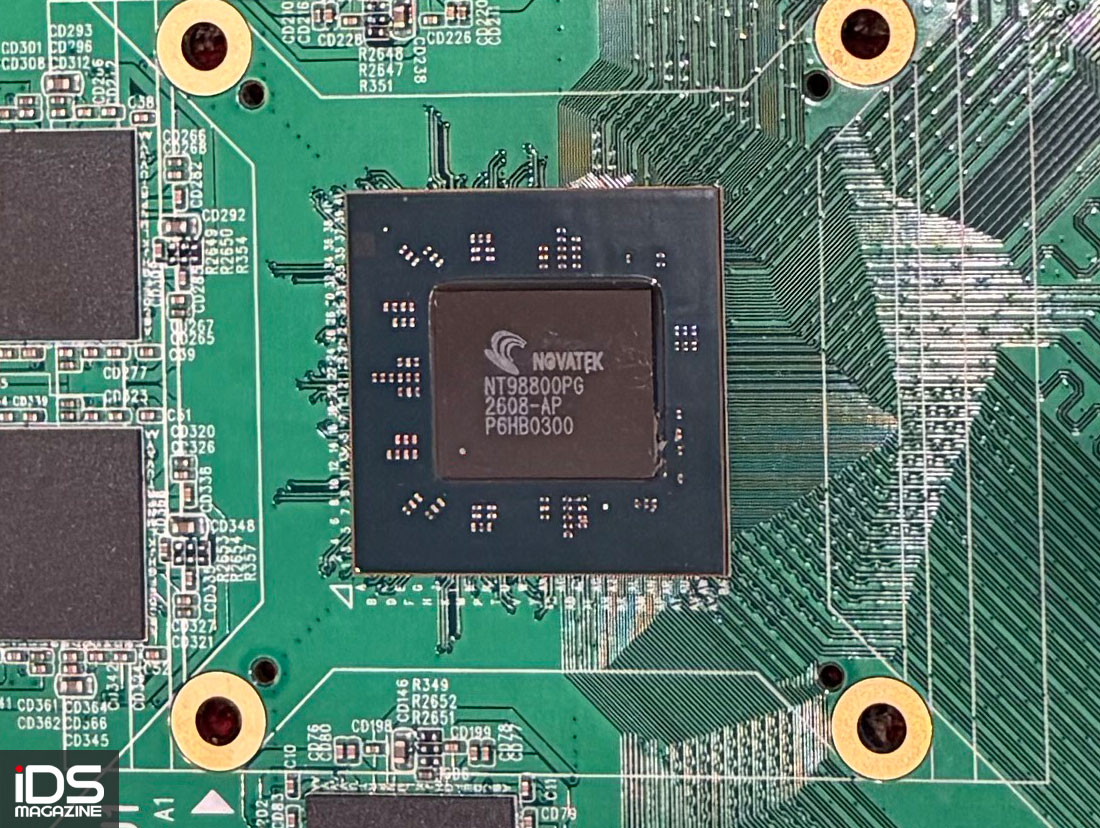
As one of the few original chip vendors in Taiwan with comprehensive security imaging chip development capabilities, NOVATEK serves as more than a chip supplier. It is also an important technology partner that helps system manufacturers drive product generation transitions. In an interview, NOVATEK noted that chip vendors in the video surveillance industry must simultaneously master image processing, compression, transmission, AI computing, system integration, and software support in order to meet the demands of a security market characterized by low-volume, high-mix products, complex product lines, and rapid iteration. As AI moves from early applications such as human detection and motion detection into the stage of VLM and agentic AI applications, the architecture of chip platforms must also be rethought.
From CNN to Transformer: NOVATEK Drives Two Key Upgrades in Security AI
As early as 2019 to 2020, NOVATEK began working with customers on the first wave of CNN-based AI applications, bringing basic AI capabilities such as human detection and motion detection to IP camera products. The focus of this stage was to equip surveillance cameras with basic recognition capabilities, gradually making AI functionality a standard feature in IP cameras. NOVATEK noted that, at the time, successful market adoption required close collaboration between system manufacturers and chip vendors. Chips had to deliver solutions that met market requirements in price, functionality, and performance at the right time in order to truly drive industry adoption.
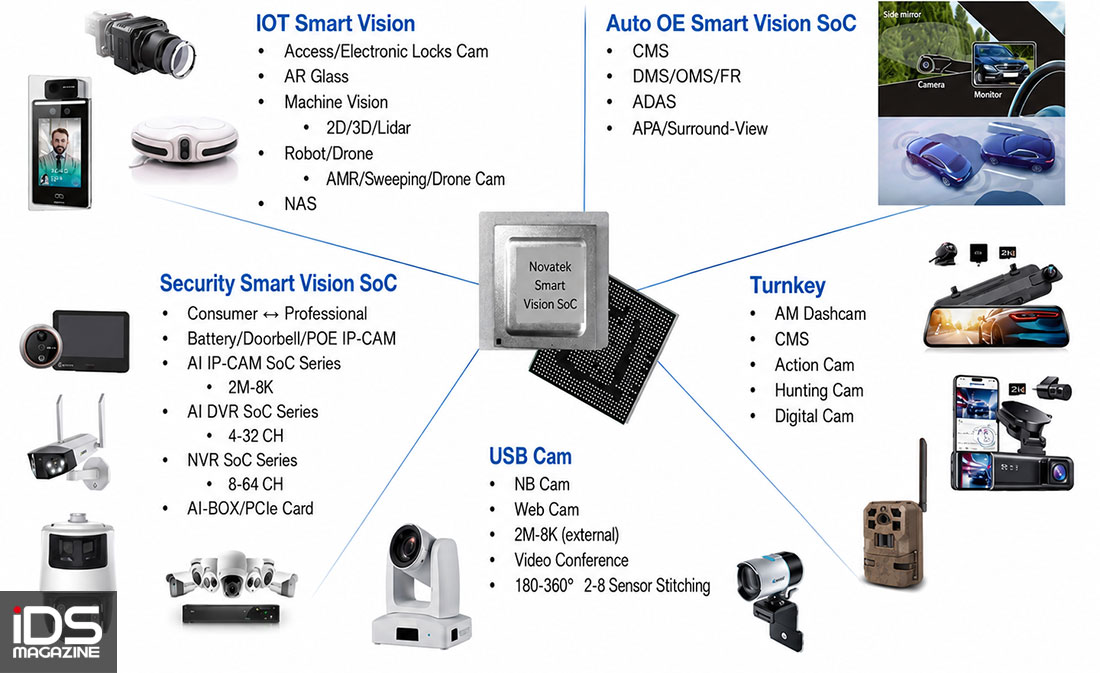
As AI technology continued to advance, NOVATEK began investing in a second major transition in video AI architecture between 2022 and 2024, moving from a CNN-based architecture toward Transformer-based models and VLM. Representative applications in this stage include Video Language Models, text-based video content search, and semantic search performed on NVRs or recording devices. In the past, video search largely relied on timelines, event tags, or manual playback. VLM allows users to find specific footage or events from recorded video through text descriptions, significantly improving the efficiency of searching through video data.
NOVATEK stated that this generation of VLM chips underwent approximately three years of development and began entering mass production in 2025. Compared with the previous chip product cycle, in which a new generation was typically introduced every four to five years, the pace of AI development is clearly compressing product refresh cycles. As VLM chips begin to reach the market, the industry is already rapidly moving into a new stage of agentic AI applications. This is pushing chip platforms to further support more advanced capabilities in understanding, judgment, and proactive alerting.
Agentic AI Video Analytics Becomes a New Focus as Surveillance Systems Begin to Understand Events
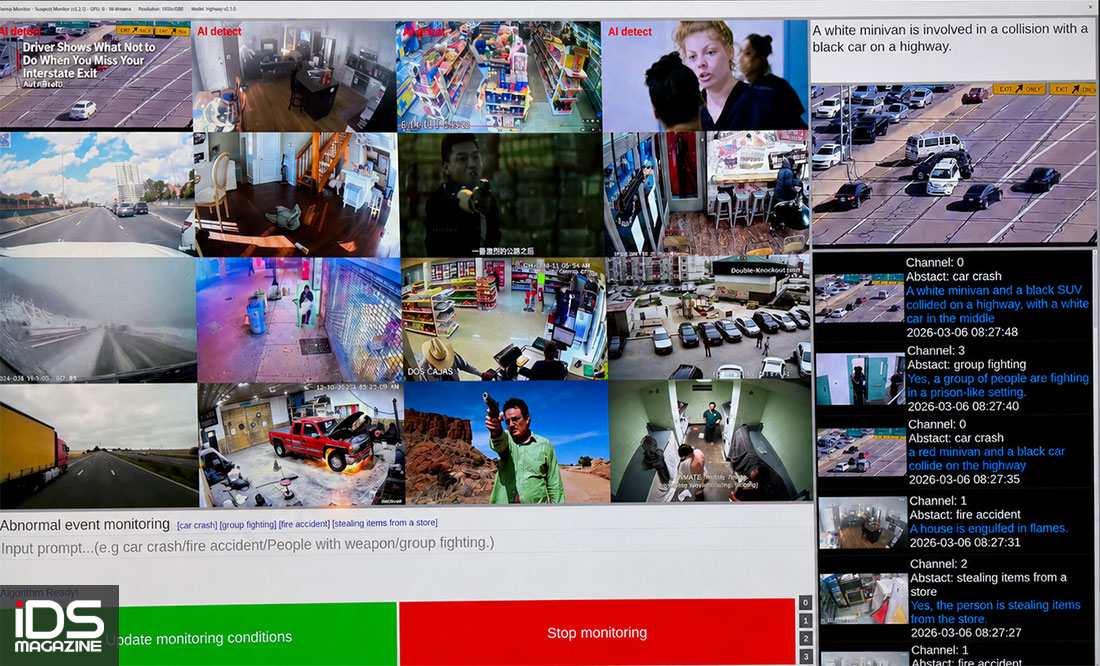
NOVATEK’s latest solution centers on agentic AI video analytics. Its main feature is to enable cameras or recording devices to proactively understand what is happening in the scene and make judgments and notifications in real time. In scenarios such as traffic accidents, fights, fires, theft, and dangerous objects, traditional surveillance systems relied on control room personnel continuously watching screens. Whether an incident was discovered largely depended on whether staff happened to notice an abnormality on screen. Agentic AI systems can continuously monitor multiple video streams, filter out events that truly matter, and proactively notify administrators, police, fire departments, or emergency responders.
In the past, much of the video data stored in recording systems had limited real-time value, while the proportion of events that truly required handling was very low. As a result, the future value of surveillance systems will concentrate on identifying meaningful events and triggering follow-up actions in real time. NOVATEK’s agentic AI video analytics solution supports text-based event condition settings, such as traffic accidents, fights, fires, theft, or possession of dangerous objects. When the system detects a related event, it can highlight the abnormal area in the image, generate a text description, and simultaneously push the video clip and event information.
Next-Generation NVR Chips Strengthen Computing Power and Video Integration to Support Multi-Channel Proactive Alarm Applications
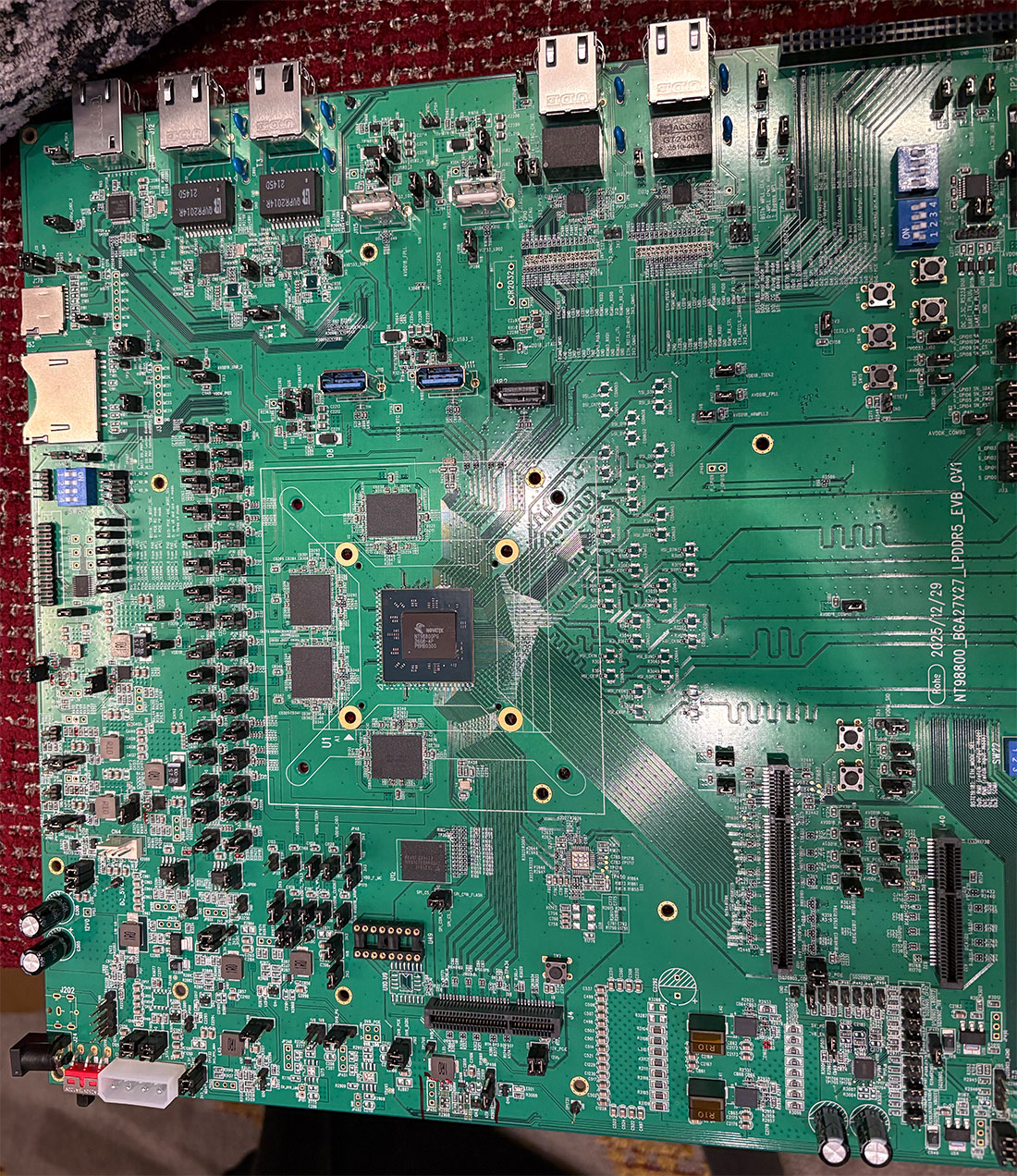
On the hardware side, NOVATEK showcased a new-generation NVR chip platform that supports agentic AI video analytics. According to NOVATEK, the previous-generation chip could demonstrate approximately four channels of proactive alarm functionality, though in actual operation with agentic AI models, around two channels were more stable. The latest-generation chip is expected to support 16 channels of simultaneous proactive alarm analysis, with a 16-channel demo to be completed later. This means agentic AI functionality will no longer be limited to single-channel video testing, but will move toward real-world deployment in multi-channel NVR surveillance environments.
Agentic AI video analytics places higher demands on chip computing power and memory bandwidth. NOVATEK stated that its strongest previous-generation NVR chip provided more than 4 TOPS of AI computing power, while the new solution increases this to 32 TOPS. Memory bandwidth has also been upgraded from 64-bit to 128-bit. Because AI models rely heavily on computing power and memory bandwidth for video understanding and event inference, this hardware upgrade will directly affect the real-time performance and stability of multi-channel video analytics.
NOVATEK emphasized that the advantage of the new solution lies in its deep integration of video, NVR, IP camera, and AI functions. Many AI applications in the market still use add-on architectures, where the AI module and video system have limited integration. This can create limitations in performance, latency, system stability, and user experience. By integrating image processing, recording systems, and AI computing at the chip level, NOVATEK enables AI functions to be more tightly embedded into camera and recording device architectures. This helps customers reduce product design complexity while improving the efficiency of bringing end solutions to market.
Proactive Alarms Will Change Control Room and Site Management Models
The widespread adoption of agentic AI video analytics will directly affect traditional control room and site management models. NOVATEK stated that, in the future, control room personnel may no longer need to stare at multiple screens for long periods while waiting for incidents to occur. The system can proactively filter out meaningful abnormal events, then push video, descriptions, and alerts to responsible personnel. For convenience stores, parking lots, factories, campuses, residential communities, traffic intersections, and public spaces, this type of function can significantly reduce the labor burden of monitoring while improving event response speed.
In retail and convenience store scenarios, for example, the system can detect theft, dangerous objects, or abnormal behavior, then immediately notify store managers or security units. In traffic scenarios, cameras can identify accidents, generate accident descriptions, and push video clips and alerts to police or emergency responders. In fire safety scenarios, once the system detects a fire, it can further connect with fire departments or drone applications, allowing drones to go to the scene immediately to verify the situation and help shorten emergency response time.
This architecture, in which video perception initiates follow-up action, also moves security systems into a more proactive stage of application. Cameras and NVRs are no longer devices that simply wait for users to search through footage. They are becoming intelligent nodes capable of real-time judgment, event description, and triggering notifications, dispatches, or other automated workflows. For the industry, this also means that future security system interfaces, event management logic, and backend platform architectures may all be redesigned.

From Video Search to Event Decision-Making, AI Agents Will Become the Core of the Next Wave of Transformation in the Security Industry
The industry transformation brought by agentic AI video analytics may be more influential than the video surveillance upgrades of the past decade. Over the past several years, AI has enabled cameras to perform human detection, object recognition, and video search. Going forward, AI will further understand event context, judge abnormal behavior, and proactively help users respond. This will move security surveillance from “being able to see” to “being able to understand,” and then further toward “being able to proactively alert and trigger action.”
With VLM chips entering mass production in 2025 and agentic AI video analytics solutions advancing in parallel, NOVATEK is attempting to push security surveillance into its next stage. Over the next three years, if agentic AI functions gradually become widespread across IP cameras, NVRs, recorders, and various smart environments, the core value of security systems will move beyond video storage and post-event search, further shifting toward event understanding, proactive alerts, and real-time response. This is also the most important technical direction and market proposition of NOVATEK’s new-generation imaging chip solution.
|
| |
| |
※The text and images in this article may not be reproduced without authorization. For licensing inquiries, please email contact@aimag.tw — [iDS Magazine Statement]※ |
|
|
|
| |
|
| |
|
|
|
| |
|