| |
|
| Why Surveillance Images Gradually Lose Focus Without Anyone Noticing |
|
|
|
| Emily |
Published: :2025/12/28 |
|
|
|
|
|
| |
|
| |
|
|
| During the planning stage of most security projects, discussions tend to revolve around camera resolution, night-vision performance, and AI capabilities. Yet after years of real-world operation, system operators often encounter a problem that is hard to define as a clear malfunction, but is unmistakably wrong: the image slowly becomes blurry, as if the focus has drifted over time. This phenomenon is not the result of an obvious camera failure, but rather a gradual process that accumulates quietly. It is also one of the main reasons many sites only realize—upon later review—that image quality has fallen far below what it was at the time of system acceptance. |
| |
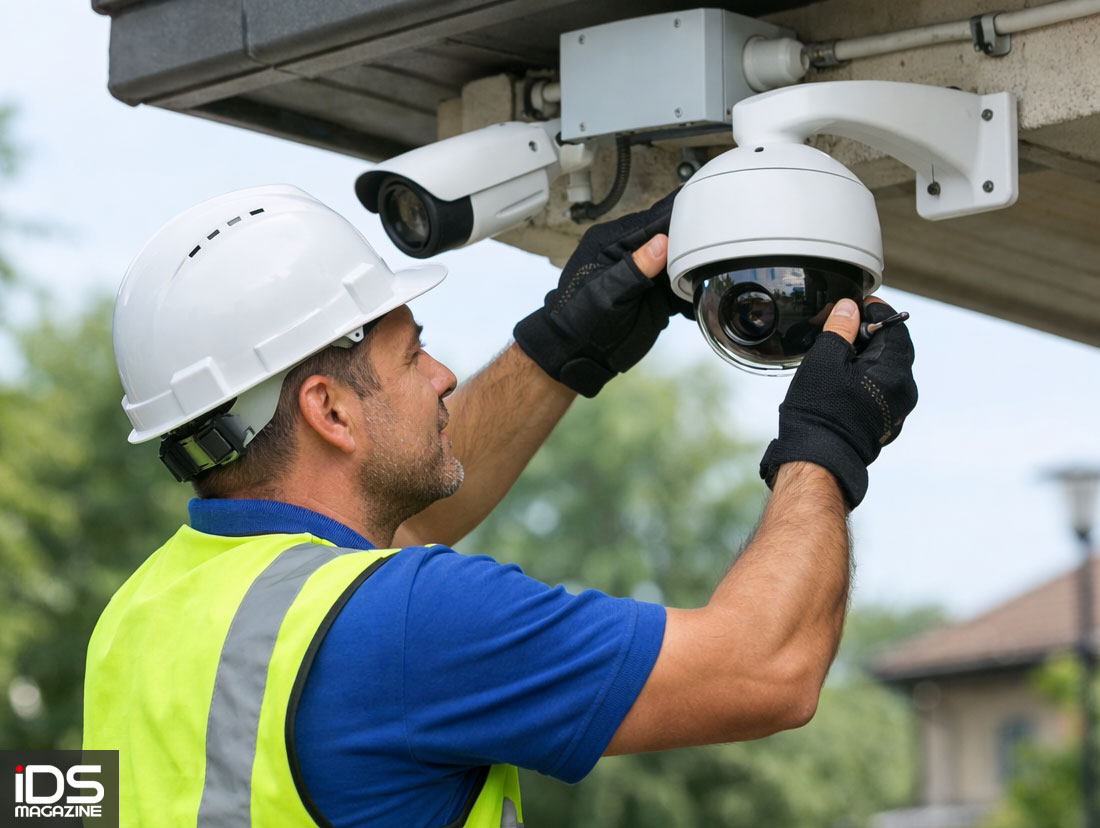
From an optical standpoint, surveillance cameras are not static objects that remain unchanged forever. Whether using fixed lenses, varifocal lenses, or modules with auto-focus and auto-iris mechanisms, all cameras contain internal structures such as lens groups, focusing assemblies, and mounting components. Under continuous 24/7 operation, these small mechanical parts are exposed to vibration, aging, and wear, which can cause minute shifts over time. Even when these shifts are invisible to the naked eye, they can be enough to alter the position of focusing elements, gradually loosening what was once precise image formation. For engineers, this type of issue rarely appears in the short term; instead, it surfaces months or even years later as a vague sense that “the image doesn’t look as sharp as it used to.”
Environmental conditions are another critical factor that is often underestimated. Most surveillance cameras are installed outdoors or in semi-outdoor environments, where they are exposed to direct sunlight during the day and rapid temperature drops at night. Seasonal cycles of summer heat and winter cold subject the lens, housing, and mounting structures to repeated thermal expansion and contraction. Because different materials—metal, plastic, and glass—expand and contract at different rates, small changes can gradually develop in the distance between the lens module and the image sensor. These shifts rarely cause sudden or severe defocus, but they steadily reduce image sharpness, especially in long-distance monitoring or high-zoom applications.
For cameras equipped with auto-iris and auto-focus designs, changes in lighting conditions can further amplify this time-based loss of focus. In bright daytime conditions, the iris closes and depth of field increases, providing greater tolerance for minor focus errors. At night or in low-light environments, however, the iris opens to admit more light, resulting in a much shallower depth of field. Any slight deviation in focus that was previously masked becomes more visible. This is why many users feel that a camera “looks fine during the day, but becomes especially blurry at night.” In reality, the issue is often not weak night performance, but gradual drift in the optical structure and automatic adjustment mechanisms away from their optimal operating point.
Beyond mechanical and environmental factors, lens surface contamination also plays an important role. Unlike consumer cameras, surveillance cameras are rarely cleaned or maintained on a regular basis. Long-term exposure to dust, grease, humidity, and insect activity allows dirt to accumulate on the lens glass and protective cover, and temperature differences can cause fogging or condensation. These issues do not instantly turn the image into a blur; instead, they slowly reduce contrast and edge sharpness, making the image appear out of focus when, in fact, incoming light is already being scattered and degraded before it even enters the lens.
At the system level, image degradation may also stem from factors unrelated to optics. Unstable power supplies, aging cables, oxidized connectors, or signal interference can all reduce image detail and motion clarity, creating visual effects that resemble defocus. These problems are especially common in analog systems and long-distance transmission scenarios. Even in IP-based systems, network quality and device aging can affect image encoding and reconstruction, causing once-sharp images to gradually lose clarity.
In short, when we talk about surveillance cameras “gradually losing focus over time,” we are rarely dealing with a single failed component. Instead, it is the combined result of optical aging, accumulated environmental stress, changes in automatic adjustment behavior, surface contamination, and overall system degradation. This explains why, in many factories, campuses, and public facilities, cameras may still appear to function normally while their practical image usability has quietly declined. For managers, the real problem often emerges only when an incident occurs and recorded footage must be reviewed—at which point critical details can no longer be clearly identified. This challenge is often more troublesome than outright equipment failure. Ultimately, the usable lifespan of a surveillance system depends on long-term maintenance practices, environmental assessment, and regular review of image quality, underscoring the fact that surveillance is not a one-time installation, but a system that requires ongoing care and management. |
| |
| |
※The text and images in this article may not be reproduced without authorization. For licensing inquiries, please email contact@aimag.tw — [iDS Magazine Statement]※ |
|
|
|
| |
|
| |
|
|
|
| |
|