| |
|
| Taiwan’s First “Smart Cloud Recognition System” Redefines Local Public Security Capabilities |
|
|
|
| Emily |
Published: :2026/2/4 |
|
|
|
|
|
| |
|
| |
|
|
| As criminal methods continue to evolve at an accelerating pace, the greatest challenge facing modern law enforcement is no longer evidence collection alone, but the ability to rapidly extract actionable intelligence from vast volumes of fragmented video footage and digital information. In response, the Taichung City Police Department has officially unveiled its “Smart Cloud Recognition System”, an AI-powered policing platform designed to support digital investigations, major criminal forensics, and the protection of women and children. The system represents a strategic shift toward making video and data assets immediately operational tools for frontline law enforcement. |
| |
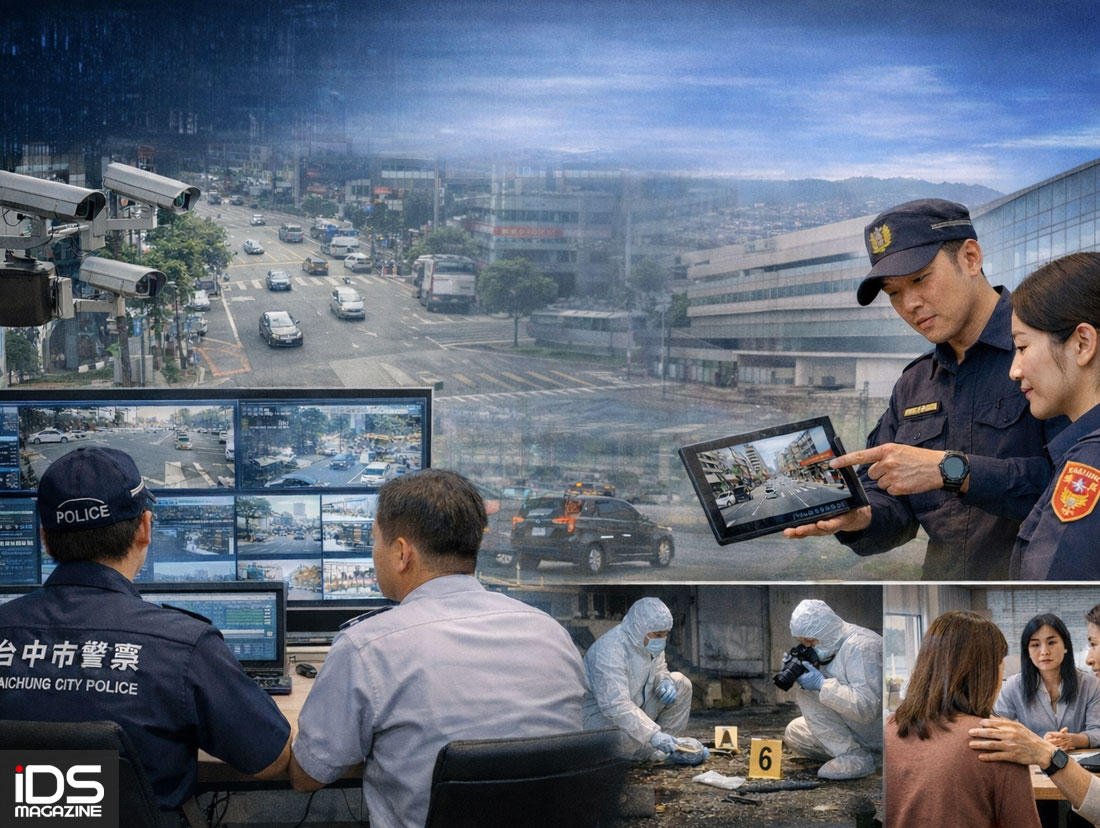
According to the Taichung City Police Department, the “Smart Cloud Recognition System” is a nationwide first in Taiwan’s police applications. By integrating artificial intelligence with cloud computing, the platform addresses long-standing challenges faced by investigative units, including information overload and mounting time pressure during criminal investigations. The goal is to enhance investigative efficiency while strengthening the digital foundation of modern policing operations.
In cases involving cybercrime, threatening videos, viral social media footage, or major criminal incidents, investigators have traditionally faced a recurring problem: uncertainty about where an event actually occurred. When only a vague video clip or a single screenshot is available, officers often must rely on manual street-view comparisons and on-site inspections across multiple possible locations. This process can consume hours or even days and depends heavily on individual experience and intuition.
The Taichung City Police Department acknowledges that as case volumes increase and video sources multiply, traditional manual comparison methods can no longer meet operational demands. This reality became a key driver behind the launch of the “Smart Cloud Recognition System”. Through cross-agency collaboration, the department has combined national-level cloud computing infrastructure with geographic information resources to develop an AI-centric platform for image recognition and location identification.
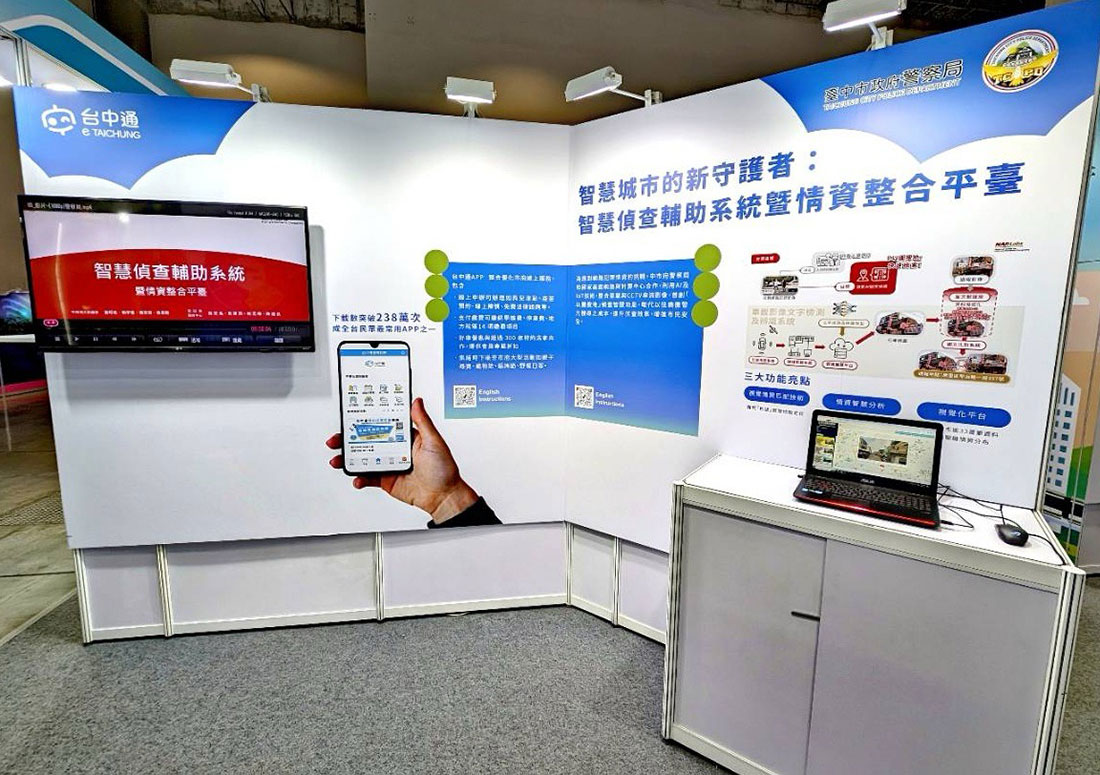
The “Smart Cloud Recognition System” is built on a centralized cloud architecture. On the front end, it can ingest image data from a wide range of sources, including citizen-submitted videos, social media screenshots, in-vehicle cameras, and key frames extracted from existing police surveillance systems. On the back end, cloud computing resources perform image feature extraction and comparative analysis.
The system integrates geographic information systems (GIS), street-level imagery databases, and AI-based image analysis models, enabling investigative tools such as “search location by text” and “search location by image.” Visual clues—such as building facades, road layouts, and storefront signage—can be rapidly matched and geolocated. Tasks that once required extensive manual effort can now be completed in minutes or even seconds, significantly shortening investigation timelines and improving decision-making efficiency.
Investigators simply upload a video clip or screenshot to the platform, which automatically analyzes visual features and returns a list of potential filming locations or similar scenes for cross-verification. The Taichung City Police Department emphasizes that the system is designed to support professional judgment rather than replace it, allowing officers to focus their expertise on follow-up actions such as camera retrieval, movement reconstruction, and case advancement once the initial assessment phase has been dramatically accelerated.
Taichung City already operates an extensive network of public surveillance cameras and intersection monitoring systems covering major arterial roads, key traffic junctions, and public safety hotspots. These existing assets form a critical data foundation for the “Smart Cloud Recognition System”. The core design objective is resource integration—linking previously fragmented image systems so that frontline camera footage can be rapidly transformed into high-value digital investigative leads whenever needed.
The system has also begun demonstrating tangible value in the forensic support of major criminal cases. In incidents such as fires, shootings, serious violent crimes, or body-dumping cases, investigators must reconstruct environmental conditions and patterns of human and vehicle movement within extremely limited timeframes. The police department notes that the system’s image matching and location identification capabilities accelerate information exchange between forensic units and investigative teams, creating a closed operational loop from on-site evidence collection to digital analysis and back to tactical deployment.
Beyond criminal investigations, the “Smart Cloud Recognition System” is positioned as a key component of Taichung’s broader framework for protecting women and children. In cases involving sexual assault, stalking, or domestic violence, the police department explains that the platform can assist in rapidly clarifying victim movement trajectories and identifying potential risk areas. When combined with existing reporting mechanisms and inter-agency coordination frameworks, the system improves response speed and reduces the risk of investigative delays.
The Taichung City Police Department underscores that the ultimate purpose of the “Smart Cloud Recognition System” is to strengthen the foundational capabilities of digital investigations by embedding technology directly into everyday policing workflows. By consolidating dispersed urban image and data resources into a single, on-demand platform, recorded footage and digital traces are transformed from passive records into active public safety assets—laying a solid foundation for the continued expansion of smart policing in the future.
|
| |
| |
※The text and images in this article may not be reproduced without authorization. For licensing inquiries, please email contact@aimag.tw — [iDS Magazine Statement]※ |
|
|
|
| |
|
| |
|
|
|
| |
|