|
|
| Have you often heard people say, “Our cameras comply with ONVIF standards,” or “As long as the camera is ONVIF-compliant, we can receive its video feed”? Indeed, ONVIF has become one of the most important global open industry standards organizations driving unified specifications in the security industry in recent years. Founded in 2008, ONVIF, the Open Network Video Interface Forum, is primarily dedicated to providing and promoting standardized interfaces for IP-based physical security products and services, enabling interoperability across different brands, systems, and deployment models. As AI technology rapidly enters the video surveillance industry, the role of security systems is undergoing a fundamental transformation. iDS Magazine conducted an exclusive interview with ONVIF Chairman Leo Levit to discuss the opportunities and challenges AI is bringing to the security industry. |
| |
AI Is Moving Video Surveillance from Passive Recording to Proactive Prevention
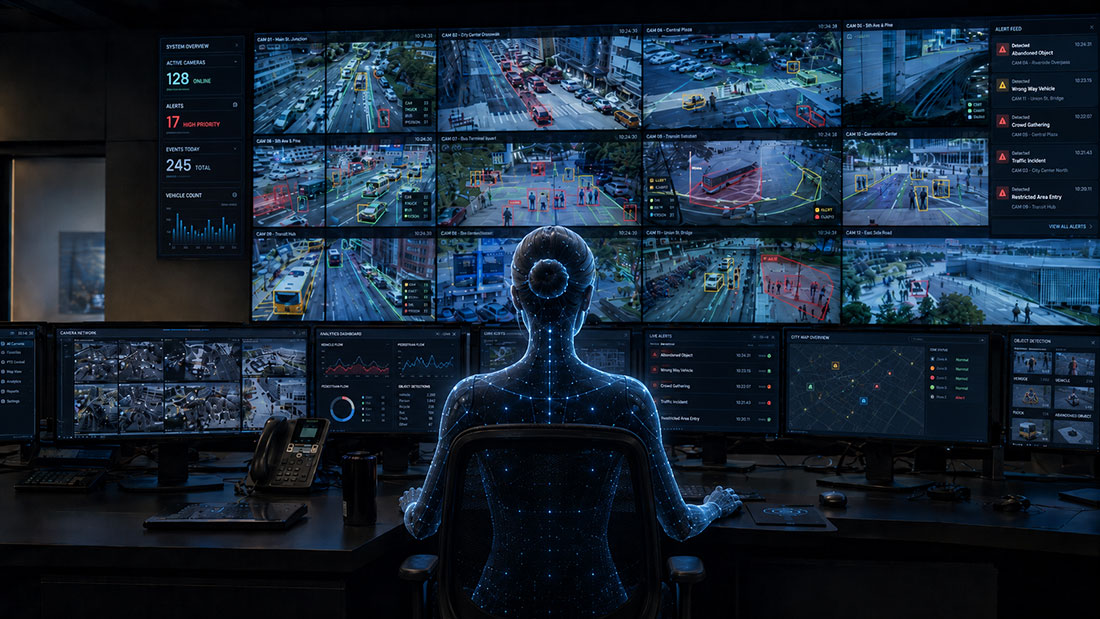
In the interview, Leo Levit pointed out that the biggest change AI has brought to the video surveillance industry over the past few years lies in the gradual shift of surveillance systems from passive tools for post-incident recording and investigation to more proactive systems capable of intelligent assessment and prevention. For the overall industry, AI has become one of the most influential technologies in recent years, driving the evolution of cameras, sensors, video management platforms, and a growing range of surrounding application services. Levit stated that traditional video surveillance has long focused on detecting, recording, analyzing, and investigating events after they occur. The footage captured by cameras has typically been used to reconstruct incidents, support responsibility attribution, or, in certain scenarios, create a deterrent effect through the visible presence of surveillance.
As AI technology becomes more widely integrated into cameras and various sensing devices, the industry is moving from passively receiving the results of incidents toward real-time analysis and risk prevention. AI can help systems generate more structured data, allowing users to better understand what is actually happening within a camera’s field of view and conduct analysis at a much larger scale. The ultimate goal is to reduce the likelihood of incidents by identifying potential risks before they cause harm. Levit emphasized that, for the security industry, the ideal crime or accident is the one that never happens in the first place. This is where the value of AI lies: it allows video surveillance to move beyond post-event verification and extend into earlier-stage anomaly detection through video data, behavior recognition, object detection, and event analysis.
The changes brought by AI now extend across the entire security industry chain. In addition to camera manufacturers increasingly adopting hardware and chipsets capable of accelerating AI inference, video management system providers, systems integrators, and new market participants that deliver services based on video data are also beginning to create new application value on top of AI metadata and event data. This also means the role of the camera is changing. It is gradually evolving from a simple video capture device into an intelligent node capable of generating data, describing on-site conditions, triggering events, and supporting back-end decision-making. Levit believes AI has already gained broad adoption in the security field and is creating value for different end users and cross-industry applications. However, the industry is still in a stage of high expectations and rapid expansion, and AI applications have yet to reach their true peak.
Profile M Becomes a Common Language for Cross-Brand, Cross-Industry, and System Integration
As cameras and sensors begin generating large volumes of AI metadata, enabling different brands, systems, and platforms to correctly understand and exchange data becomes a key factor in the real-world deployment of intelligent security. Addressing this challenge, Levit highlighted the importance of ONVIF Profile M. He explained that Profile M is ONVIF’s first specification more specifically focused on standardizing metadata and event data. Its goal is to allow cameras, sensors, and other systems and devices connected to surveillance systems to generate and transmit events and analytics results in a consistent format.
Standardized data formats carry significant practical value for cross-brand system integration. When video analytics results lack a common language, even if front-end cameras have AI detection capabilities, back-end platforms and third-party systems may struggle to effectively receive, interpret, and use that information. Profile M provides a standardized way for analytics-capable services, IP cameras, VMS platforms, servers, cloud services, and IoT applications to transmit metadata and events, allowing systems integrators and end users to more flexibly combine equipment and services from different vendors. In security applications, Profile M can support the exchange of data related to license plate recognition, people detection, object recognition, and various types of event analytics, enabling cameras, VMS platforms, analytics systems, and management systems from different brands to integrate based on a shared standard.
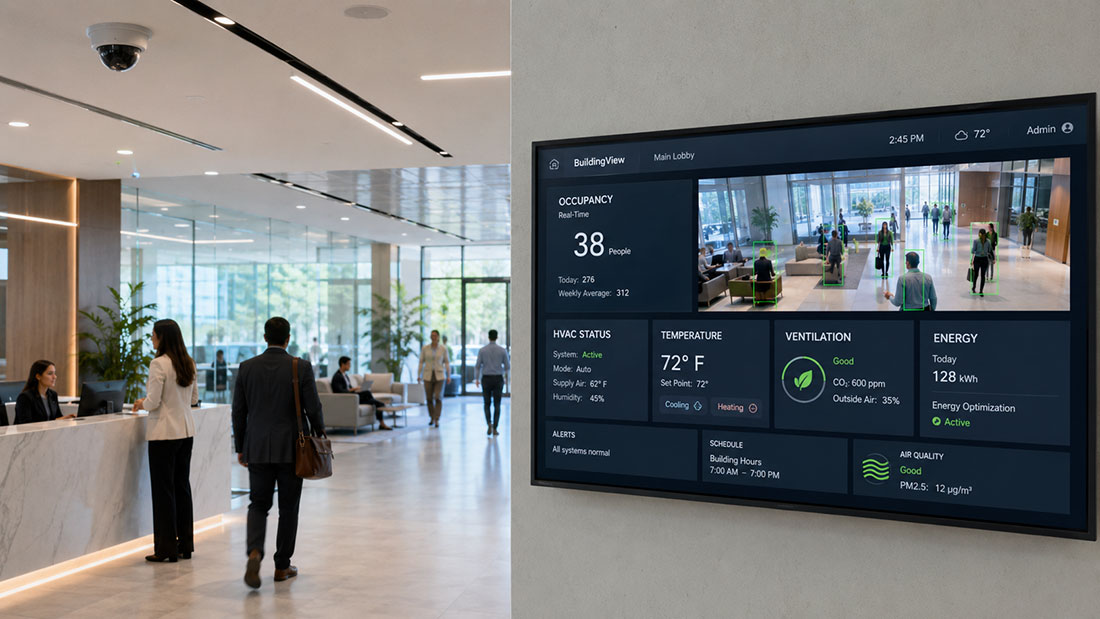
For cross-domain and cross-system integration, Levit used indoor occupancy counting and HVAC system linkage as an example. When a camera can detect and count the number of people inside a room or venue, that data can be transmitted in the Profile M format to an HVAC system, which can then adjust temperature or ventilation volume according to the actual number of people on site.
Through the Profile M format, AI metadata can be used for security events and further extended to operational efficiency, energy management, and process optimization scenarios. In smart buildings, smart cities, and intelligent facility management, data generated by video surveillance devices will become an important foundation for site management and automated control. For systems integrators, this type of standardized data also represents more possibilities for cross-system connectivity, allowing video surveillance data to further connect with HVAC, lighting, people flow management, parking management, and operational dashboards. Levit noted that among ONVIF’s various profiles, Profile M is one of the fastest-growing specifications in terms of the number of conformant products, reflecting the industry’s rapidly rising demand for metadata and event standardization.
Media Signing Responds to the Challenge of Video Authenticity in the AI Era
In addition to AI metadata standardization, media authenticity and video trustworthiness are also issues ONVIF has been paying close attention to recently. Levit stated that the media signing mechanism ONVIF is promoting has become one of the most discussed topics in public forums in recent years.
As generative AI and deepfake tools become more widespread, users are finding it increasingly difficult to determine with the naked eye whether the video they see on screen is genuine recorded footage or content that has been generated, modified, or falsified using AI tools. For the security industry, this is a very serious challenge, because surveillance video has long been regarded as an important source of evidence for incident verification, legal procedures, and responsibility determination. Once the authenticity of video content is called into question, the trust foundation of the entire video surveillance system is affected.
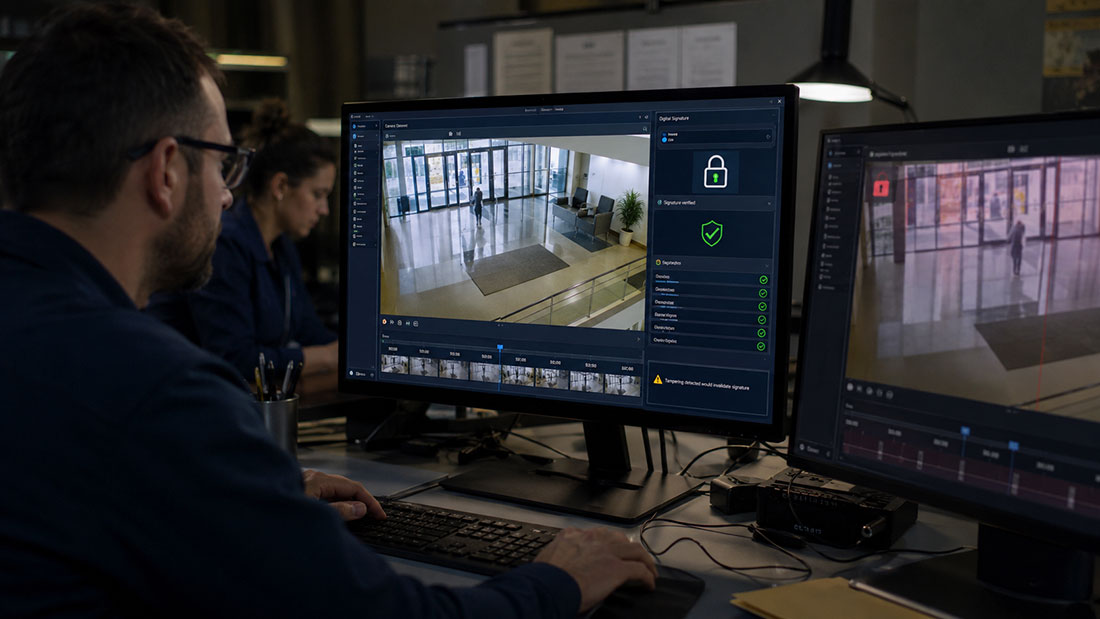
Levit explained that the concept of media signing proposed by ONVIF is to sign video at the very front end of the image processing chain, namely at the sensor level. This mechanism is based on a unique hardware signature from each device, allowing users at any point in time to trace the source of the video and confirm which camera recorded it, the device serial number, the recording time, and the corresponding manufacturer and model information.
Building a Trusted Video Source Through Sensor-Level Signing
If the video is edited, tampered with, or modified by conventional tools or AI tools at any stage between the sensor and the viewing endpoint, the original signature will be broken, and the system will be able to indicate that the video has been altered. This carries significant importance for court evidence, incident investigations, insurance claims, public safety, and the management of highly sensitive environments.
ONVIF has already made the Media Signing Framework available on GitHub. According to the project description, ONVIF Media Signing helps protect signed video from tampering by adding cryptographic signatures to the video. Its approach includes hashing every video frame and repeatedly generating signatures using the private key configured by the signer. The signature data added to the video does not affect video playback.
Levit emphasized that maintaining video as a trusted source of evidence is critical to the security industry. ONVIF’s purpose in promoting media signing is to make it easier for manufacturers and system developers to implement video integrity protection mechanisms and to rebuild trust in surveillance video as an evidence source in an era when AI-based video falsification tools are becoming increasingly common. In addition, ONVIF’s collaboration with C2PA aims to advance digital video integrity and trustworthiness amid the rising risks of AI-generated content manipulation.
Levit stated that C2PA and ONVIF share similar goals in media trustworthiness, although they focus on different aspects. C2PA places greater emphasis on tracking the origin and history of content throughout its lifecycle, namely provenance. ONVIF focuses more specifically on the authenticity of security video, including whether the content is genuine, whether it comes from a trusted device, and whether it has been tampered with during transmission or storage.
The two organizations are advancing market education and technological development from different perspectives, jointly raising public awareness of content trustworthiness. For the security industry, this collaboration has clear significance. As deepfake video, generative content, and misinformation become shared global challenges, trust mechanisms for surveillance video are now directly connected to public safety, judicial evidence, and social trust.
Establishing an AI Working Group to Drive the Next Stage of Standardization
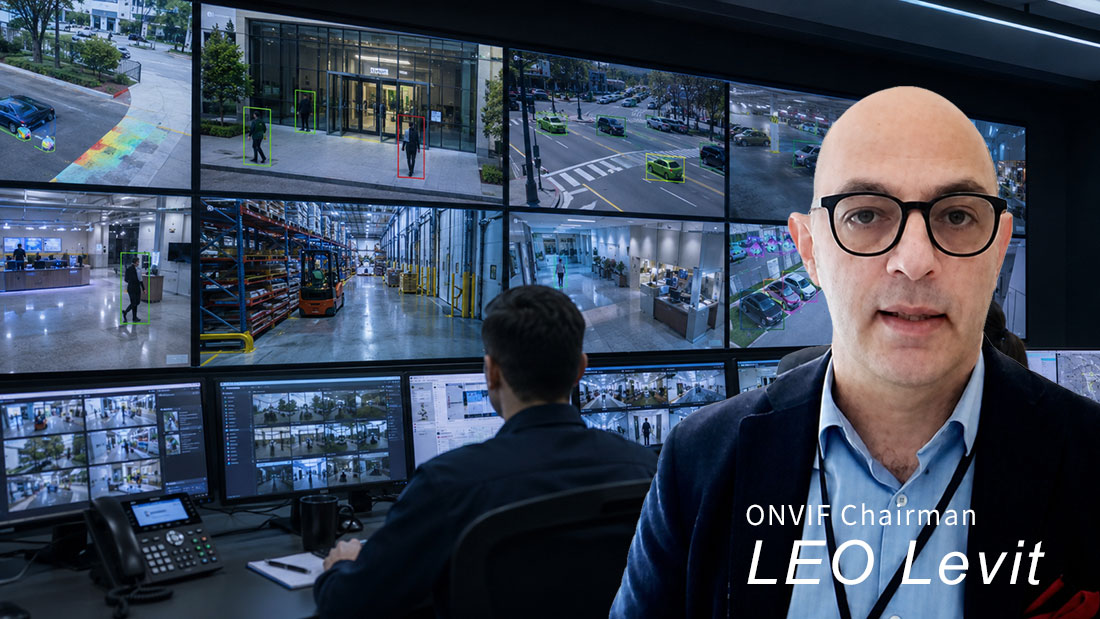
Discussing ONVIF’s future plans for AI standards, Levit said ONVIF is a member-driven organization, and its standardization work and future direction are shaped by member needs and industry consensus. AI remains one of the most closely watched technology topics in the industry, which is why ONVIF members see it as an important direction requiring further standardization. In response to this demand, ONVIF has established an AI working group to discuss AI-related use cases, applicable technologies, and how they may be defined and standardized in future ONVIF specifications. The mission of this AI working group is to ensure ONVIF remains usable and extensible in the AI era.
Levit pointed out that ONVIF’s goal is to enable standards to work together with AI-based systems. On one hand, AI systems should be able to analyze data generated by ONVIF products. On the other hand, ONVIF specifications should also be capable of generating structured data that AI agents or other intelligent systems can understand and use. This means ONVIF’s future standardization work will further consider how data can be read, understood, reasoned over, and applied by AI systems. At the end of the interview, Levit stated that AI is pushing video surveillance toward a more proactive, data-driven, and cross-system integrated stage, and standardization will be the key to whether this transformation can truly scale in real-world deployments. |
| |
| |
※The text and images in this article may not be reproduced without authorization. For licensing inquiries, please email contact@aimag.tw — [iDS Magazine Statement]※ |
|
|
|
| |
|
| |
|