| |
|
| Understanding the NDAA - From the U.S. National Defense Authorization Act to the Rules Reshaping the Global Security Supply Chain |
|
|
|
| IDS Editor |
Published: :2025/12/23 |
|
|
|
|
|
| |
|
| |
|
|
| In recent years, across security industry exchanges—whether at ISC West in the United States, major security exhibitions in Europe, or meetings among system integrators and manufacturers in Taiwan—the term “NDAA” has become impossible to avoid. It is no longer just a footnote on a product datasheet, nor merely a market label. Instead, it has evolved into a core rule that is profoundly reshaping global security supply chains, product design logic, and corporate market strategies. For many security professionals, the real challenge is no longer whether they have heard of the NDAA, but whether they truly understand its nature—and why a U.S. defense law has become a shared threshold for the global market. |
| |
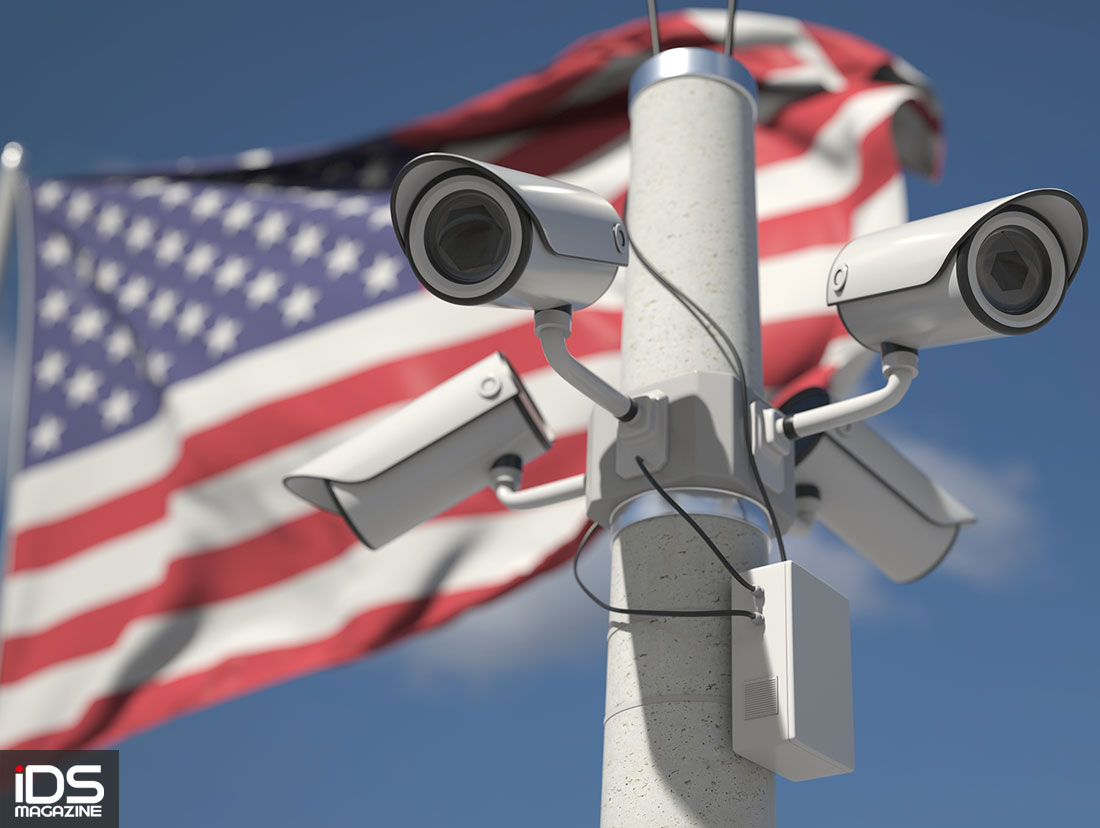
How One Term Became a Common Language Across the Global Security Industry
NDAA stands for the National Defense Authorization Act, a law passed annually by the U.S. Congress to authorize defense spending and define national defense and security policies. At first glance, such legislation appears far removed from commercial security equipment, market sales, or industrial development. The turning point, however, came with Section 889, introduced in the 2019 NDAA. It was this provision that transformed the NDAA from a defense policy document into a concrete regulatory framework that the global security industry must confront.
TThe Core Principle of Section 889- Not a Brand Ban, but Supply Chain Risk Management
The essence of NDAA Section 889 is the prohibition of U.S. federal agencies—and their contractors—from using, procuring, or otherwise introducing telecommunications and surveillance equipment from certain high-risk vendors. The intent is not simply to restrict end products, but to assess national security risks based on communications capabilities, firmware control, and supply chain controllability. For this reason, the NDAA has never been a traditional “product safety standard,” but rather a risk management mechanism centered on supply chain trustworthiness.
In practice, the impact of the NDAA has gone far beyond initial expectations. It does not merely blacklist a handful of brand names; it requires that critical components throughout a product’s entire lifecycle do not originate from restricted sources. In other words, even if a finished product itself is not from a restricted brand, it may still be deemed non-compliant if its core chips, communication modules, AI accelerators, video encoders, or firmware architecture are materially linked to restricted vendors. This requirement to trace risks upstream through the supply chain has forced the global security manufacturing ecosystem to rethink its long-standing reliance on low cost and high efficiency.
Why the NDAA Has Become an International Procurement Threshold
When the NDAA was first implemented, many in the industry assumed it would apply only to U.S. government procurement. Reality quickly proved this view too narrow. Large global enterprises, data center operators, transportation infrastructure projects, and other critical facilities are deeply connected to the U.S. market, financial system, and multinational operations. As a result, driven by risk management and compliance concerns, more and more non-U.S. owners have voluntarily adopted NDAA compliance as a procurement criterion. Even without direct legal obligation, they choose the NDAA as a minimum risk baseline to ensure supply chain control and long-term operational security.
This has gradually turned the NDAA into a kind of “quasi-global standard.” Unlike technical standards such as ONVIF or IEC, the NDAA does not define performance metrics or functional specifications. Instead, it operates at the very front of procurement decision-making, determining which products are even eligible for consideration. For system integrators, selecting NDAA-compliant equipment significantly reduces uncertainty and potential risk in cross-border projects, cloud integration, and cybersecurity audits.
Notably, as AI technologies are rapidly adopted in the security sector, the importance of the NDAA has only grown. AI cameras, edge computing devices, and video analytics platforms are no longer passive recording tools. They actively collect, analyze, and transmit large volumes of behavioral and environmental data in real time. If such systems are built on untrusted supply chains, the risks extend beyond data leakage to include remote control, firmware manipulation, or even system shutdowns.
For this reason, the core principles of the NDAA align closely with the direction of AI-driven security. As the market increasingly recognizes that “no matter how advanced the performance, a system without trusted origins cannot be viable,” supply chain transparency and security have become foundational requirements for AI security solutions. In this context, the NDAA serves not as a political constraint, but as a key indicator of whether AI security equipment is built on a trusted foundation.
The Direct Impact of the NDAA on Taiwan’s Security Industry
For Taiwan’s security industry, the NDAA is not an abstract international regulation, but a structural force that has directly reshaped product strategies and market positioning. Taiwan has long played a critical role in global security manufacturing and R&D, spanning ODM, OEM, and branded operations. Historically, many Taiwanese companies relied heavily on global supply chains to maintain competitiveness. With the NDAA imposing clear restrictions on sourcing, this cost- and efficiency-driven model has come under pressure.
In the short term, Taiwanese manufacturers have faced significant transition costs, including redesigning product architectures, replacing core chips, adjusting firmware sources, and establishing compliance documentation processes. In the medium to long term, however, this transformation has opened new strategic opportunities. Taiwan’s strong foundation in semiconductors, networking equipment, and system integration—combined with relatively transparent and traceable supply chains—has positioned the island as an increasingly important node in the global trusted supply chain.
From Manufacturing Base to Trusted Supply Chain Hub
As NDAA compliance becomes a market consensus, Taiwanese security companies are no longer seen merely as providers of price and production capacity. They are increasingly expected to demonstrate supply chain governance, cybersecurity-by-design, and long-term compliance commitments. Many firms have begun proactively developing dual product lines to address different regulatory markets, while investing more heavily in firmware security, AI module autonomy, and secure system architectures. This shift is gradually transforming Taiwan’s security industry from a pure manufacturing role into a high-value provider of trusted technologies.
From a global perspective, the NDAA is not a temporary policy phenomenon, but a clear signal that supply chain security has become a central industrial issue. For Taiwan, this represents both a challenge and an opportunity to redefine its role. As global markets place greater emphasis on trust, transparency, and resilience, Taiwan’s security industry stands at a pivotal position—one that enables it to play an indispensable role in the emerging international order. |
| |
| |
※The text and images in this article may not be reproduced without authorization. For licensing inquiries, please email contact@aimag.tw — [iDS Magazine Statement]※ |
|
|
|
| |
|
| |
|
|
|
| |
|