| |
|
| Shenkeng Old Street Adopts AIRATRACK AI to Curb Illegal Waste Disposal |
|
|
|
| Emily |
Published: :2025/11/2 |
|
|
|
|
|
| |
|
| |
|
|
| Located in New Taipei City, Shenkeng Old Street is best known for its signature stinky tofu and bustling weekend crowds. Under its red-brick arcades, streams of visitors pass by century-old storefronts where vendors’ calls blend with the aroma of grilled tofu, black pork, and Pouchong tea. Beyond being a nostalgic landmark for tourists, the historic street has also become a pilot site for smart governance, jointly managed by the New Taipei Environmental Protection Department and the Shenkeng Commercial District Development Association. |
| |
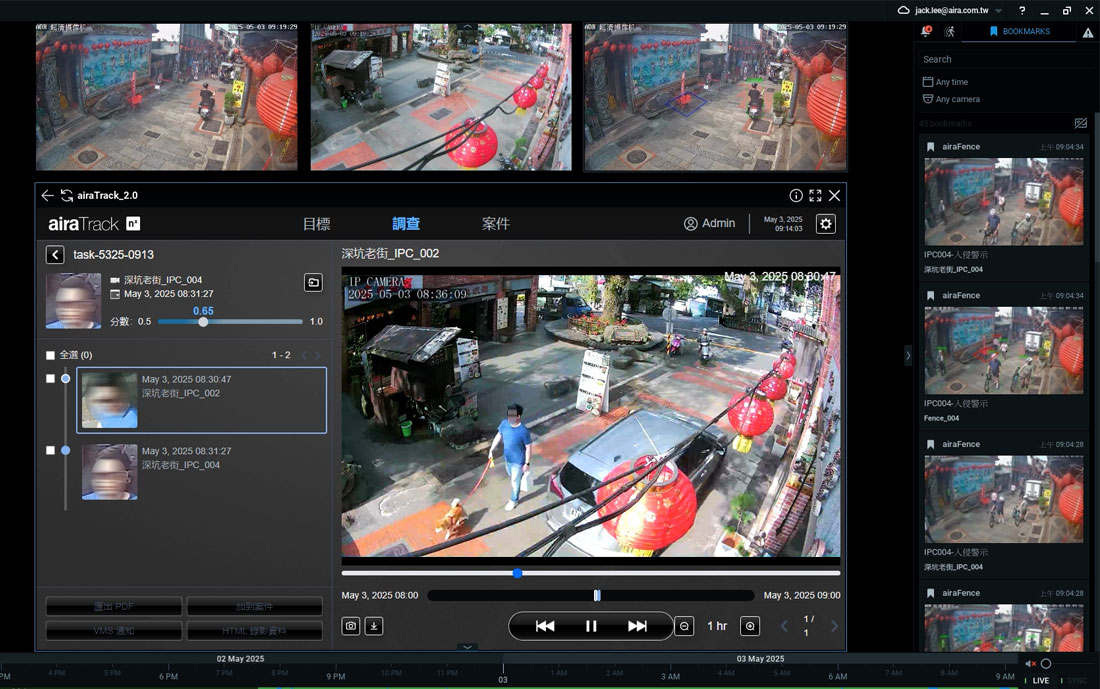
This year, the area introduced AIRATRACK, an AI-based facial and behavioral recognition system developed by City Intelligence Technology. Originally designed for urban safety and traffic monitoring, the system now acts as a new “guardian” of Shenkeng Old Street—helping local managers address waste disposal and order maintenance in a more intelligent and timely way, proving that technology can seamlessly integrate into daily community life.
AI Tracking System: Stopping Waste Dumping Before It Spreads
For Mr. Huang, the chairman of the Shenkeng Commercial District Development Association and the neighborhood chief, the biggest challenge has never been the influx of people—it’s what they leave behind. “The crowds are good for business,” he laughs, “but they also mean tons of trash.” Public bins often overflow before noon, and some nearby residents or store owners take advantage of the chaos to dump household garbage into the street’s bins.
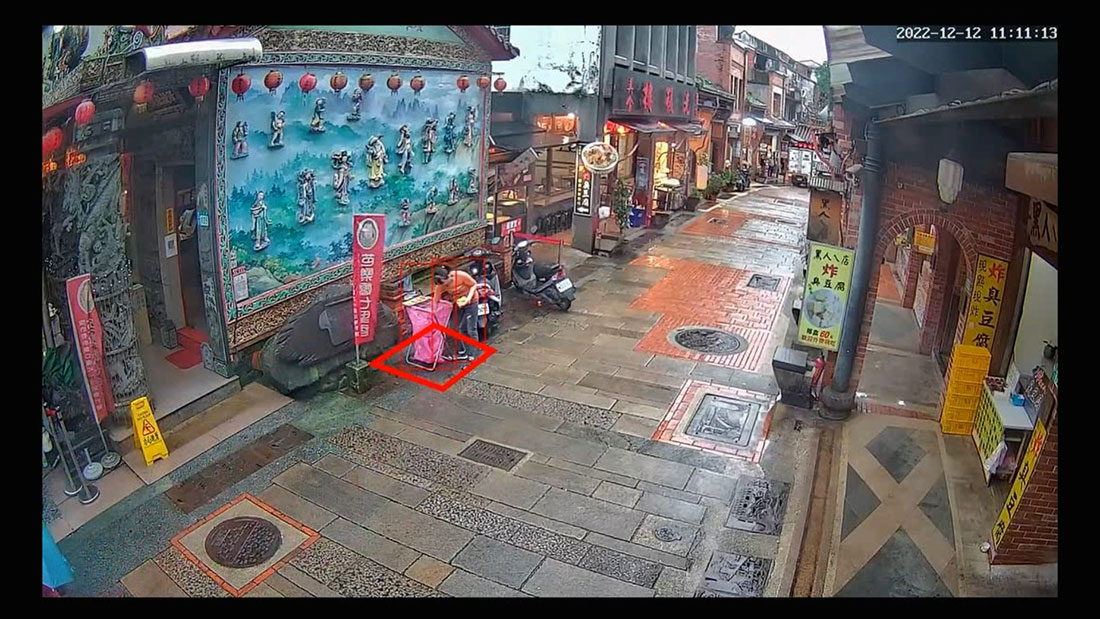
These household bags are large and costly—each 120-liter official garbage bag costs NT$48. When several are stuffed in, it not only wastes resources but also makes collection difficult. In the past, tracking violators relied on manually reviewing hours of surveillance footage.
The deployment of AIRATRACK changed everything. The AI system automatically identifies faces and unusual behaviors around designated areas. When it detects suspicious activity—such as dumping during non-business hours—it immediately sends a notification with the corresponding video clip and timestamp to the control center. If the offender arrives by car or scooter, the system can cross-check the license plate; if on foot, staff can identify suspects based on physical features like hats or masks.
“Before, finding out who dumped garbage could take three or four hours,” Mr. Huang notes. “Now, it takes five minutes.” The speed and accuracy have dramatically reduced repeat offenses.
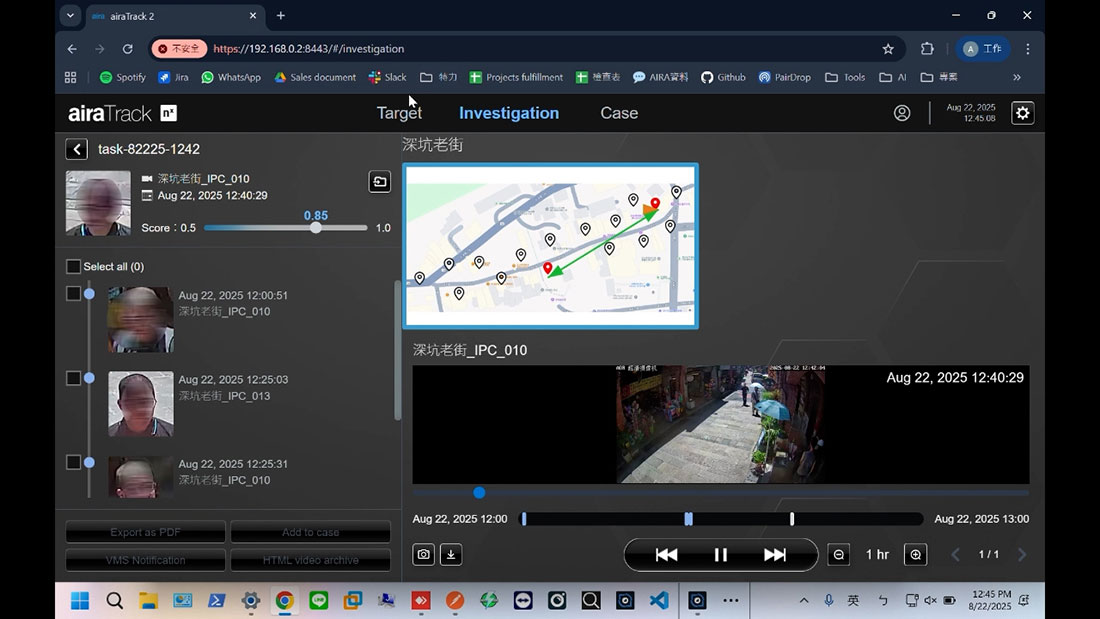
Yet, the goal is not punishment but education. “We don’t want to catch people—we want to remind them,” Mr. Huang explains. When AI detects improper behavior, the staff usually give verbal or group-message reminders first. “If it’s one of our member shops, we’ll talk privately. Only persistent offenders are reported to the authorities.” This community-centered approach—tech-assisted but people-driven—is what allows Shenkeng Old Street to preserve both order and its human touch.
Beyond Waste x AI Supporting Safety and Social Care
The AI system’s utility extends far beyond environmental management. Another recurring issue in the old street is the presence of beggars or loiterers, which can affect the area’s image. “There are a few familiar faces who sit on the same corners,” Mr. Huang says. “By the time the police arrive, they’re gone.”
With AIRATRACK’s facial recognition and behavior-tracking capabilities, the association can now maintain a “watch list.” Whenever one of these individuals reappears, the system automatically alerts the managers. “After a while, they realize they can’t stay long here,” he says calmly. “But if someone truly needs help, we contact the police and social services. Technology should assist people—not alienate them.”
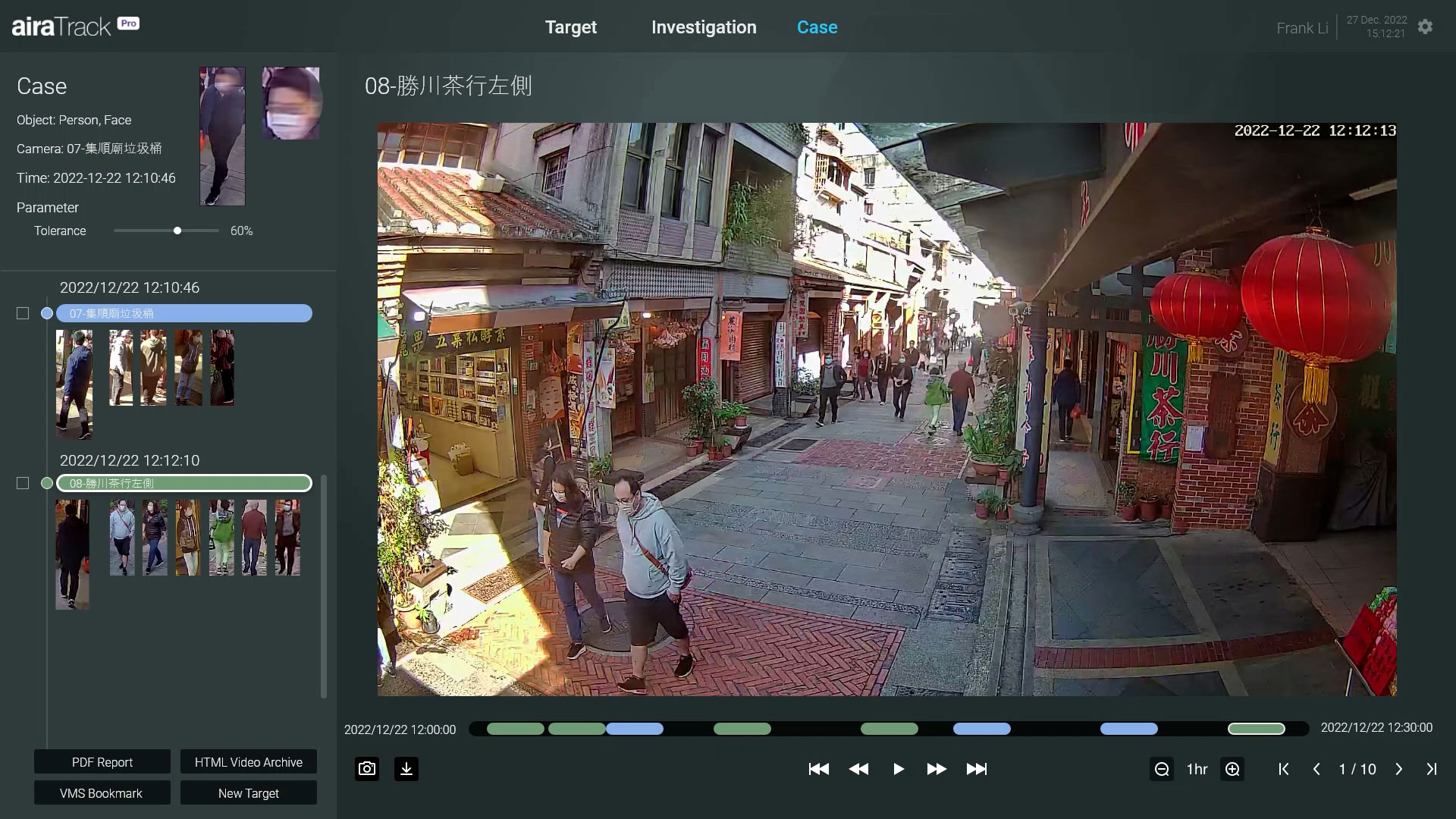
The same applies to theft prevention. On crowded weekends, cases of petty theft or “forgot-to-pay” incidents sometimes occur. Previously, merchants would post CCTV screenshots in chat groups to warn each other. Now, by uploading a snapshot to AIRATRACK, the system matches and traces the suspect’s movement in real time, alerting nearby shops. “One time, a shop reported a customer who didn’t pay for a small item. Within minutes, we located where they were. The person later came back to apologize,” Mr. Huang recounts. AI has turned passive response into active management.
For local administrators, AI provides not only efficiency but also peace of mind. Mr. Huang recalls how typhoon days used to leave him anxious while traveling abroad. “Now I can open my phone, check the live feed, and see everything’s fine. That’s real relief,” he says.
More than a surveillance tool, the system serves as an intelligent management dashboard—organizing footage into event lists, key images, and timelines. “It saves at least two-thirds of our time,” he estimates. For a community leader juggling both people and public order, the change is transformative: from reactive stress to proactive oversight.
Defining Boundaries x Using AI Responsibly
Of course, technology in public spaces raises questions of boundaries and legality. Mr. Huang admits that enforcing fines for illegal dumping is still challenging, as environmental regulations require full personal data for prosecution. “We’re not detectives,” he says. “We just collect evidence and hand it to the authorities.”

In this context, AIRATRACK serves as a real-time reporting and evidence support system—providing accurate information for lawful enforcement, while ensuring privacy and fairness.
“Real technological governance,” Mr. Huang concludes, “should be rational, humane, and restrained.” AI’s role is to help people do the right thing, not to replace human judgment. “We hope technology helps citizens become more mindful, not more fearful.”
This simple statement captures the core value behind Shenkeng Old Street’s digital transformation—a vision of smart governance where technology enhances civility, strengthens community, and preserves the warmth of human interaction. |
| |
| |
※The text and images in this article may not be reproduced without authorization. For licensing inquiries, please email contact@aimag.tw — [iDS Magazine Statement]※ |
|
|
|
| |
|
| |
|
|
|
| |
|